
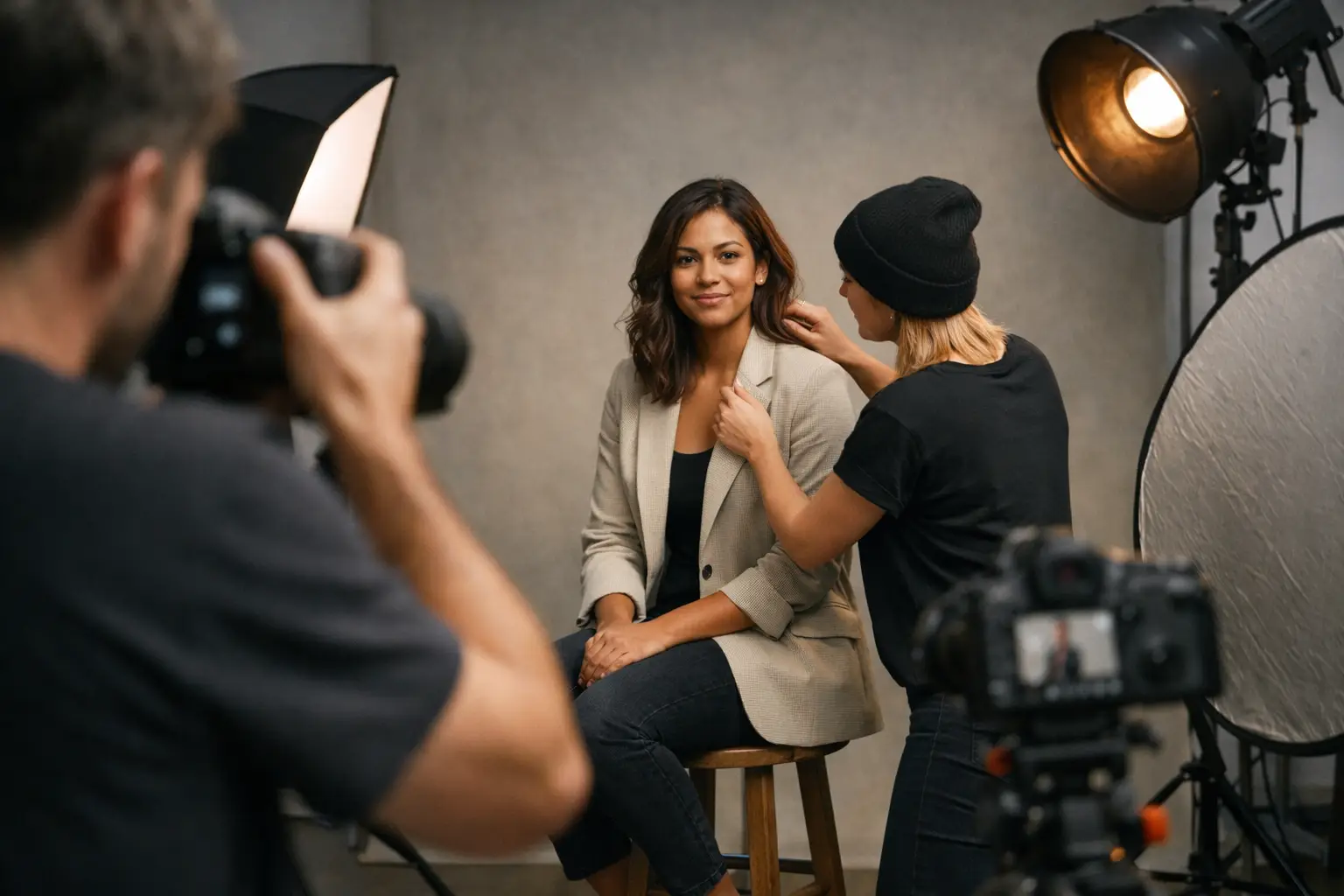
Oakland Studio Portrait Session, Art Directed
A strong portrait is not about standing in front of a backdrop and hoping the camera finds your good side. An Oakland studio portrait session should give you room to show up with intention: polished for a new role, expressive for a creative launch, or fully present for a personal milestone. The best images feel considered without looking overworked. They look like you, on a very good day, with the lighting, framing, and direction working in your favor.
For Bay Area professionals and creatives, that distinction matters. Your portrait may appear on a website, LinkedIn profile, press feature, portfolio, casting submission, dating profile, or the cover image for work you are building. It has a job to do. It also has to hold attention.
What a Studio Session Gives You
Oakland has texture everywhere - brick, street color, waterfront light, and industrial spaces can all make a compelling frame. But a studio creates something equally valuable: control. There is no shifting weather, no crowded background, no need to race against sunset. The attention stays on your expression, your wardrobe, and the visual message you want to send.
That control does not mean every portrait has to be plain. A studio session can be clean and corporate, editorial and fashion-forward, intimate and low-key, or bold enough for a campaign. The difference is in the creative choices: how light falls across the face, how much negative space surrounds you, whether the styling is restrained or graphic, and how the image is cropped for its final use.
For an executive headshot, consistency and clarity may lead. For a designer, musician, founder, or performer, personality may need more room. Neither approach is automatically better. A portrait works when its visual language matches where it will live and what it needs to communicate.
Start With the Purpose, Not the Pose
Before choosing an outfit or saving pose references, decide what this session needs to accomplish. “I need new photos” is a starting point, not a brief. Get more specific.
Are you building trust with prospective clients? Updating your professional identity after a career change? Launching a personal brand? Marking a birthday, an engagement, or a season of growth? A clear answer affects the set, wardrobe, expression, and final image selection.
A branding session usually benefits from range. You may need a confident direct-to-camera frame for your homepage, a relaxed seated image for social content, and detail shots that support a more complete story. A headshot session can be more focused, but it still needs intention. The best headshot does not simply show your face. It makes people feel they understand how it would be to meet you.
For creative portraiture, the goal may be less literal. Movement, shadow, wardrobe shape, and mood can carry as much meaning as a smile. Bring references if they help articulate the feeling, but do not try to recreate another person’s image exactly. References are useful for identifying a direction, not for replacing your own point of view.
Preparing for an Oakland Studio Portrait Session
Preparation makes the session more efficient, but it should not turn you into someone unrecognizable. Choose clothing that supports the message rather than competes with it. Solid colors, rich neutrals, refined texture, and strong silhouettes tend to photograph well. The right choice depends on your complexion, brand palette, and the planned background.
Bring more than one option when your session allows for it. A structured jacket can read as confident and elevated. A knit, open collar, or simple tee can make the image feel more accessible. For fashion-focused work, a single statement piece may provide the shape and energy the frame needs. Avoid making every look equally loud. Contrast gives the final gallery more range.
A few practical details make a visible difference:
Steam or press garments before arriving, especially collars, sleeves, and dresses.
Bring shoes that work with each look, even if only part of them will appear in frame.
Keep accessories purposeful. One strong element often photographs better than several competing ones.
Choose grooming that feels like your usual best, not an unfamiliar version of you.
If you wear makeup, studio lighting generally rewards a polished, camera-ready finish. If you do not, that is not a problem. Good direction and thoughtful light matter more than a prescribed look. The goal is not perfection. It is presence.
Direction Is Where the Portrait Changes
Most people are not professional models. They should not need to be. A well-directed session removes the pressure to invent poses while someone watches. Small adjustments in chin angle, shoulder position, posture, hand placement, and eye line can completely shift a frame.
Good direction is specific and calm. Instead of “be natural,” it gives you something usable: turn slightly toward the light, let one shoulder drop, bring your gaze just past the lens, take a breath before the shutter. Those changes create photographs that feel composed rather than stiff.
Expression is more nuanced than smiling or not smiling. A subtle smile may read as approachable and assured. A neutral expression can feel grounded, editorial, or serious. A laugh caught between posed moments can bring warmth to brand imagery. The right expression depends on the intended audience, and it is often worth creating several options during one session.
This is also why rushing is a poor trade-off. The first few minutes are often about settling in. Once you understand the rhythm of the shoot, your posture softens and your face becomes more responsive. The strongest image is frequently not the first frame. It arrives after the camera and subject have found a shared pace.
Think Beyond One Final Photo
A studio portrait session can produce more value when it is planned around actual placement. Vertical images are useful for profile pages, stories, and mobile-first layouts. Horizontal frames can support website banners, speaker announcements, press materials, and presentation slides. Close crops deliver impact. Wider frames give designers space for text.
Tell your photographer where the images will appear before the session begins. If your website has a dark visual identity, a bright white background may not be the most natural fit. If you need a LinkedIn headshot and a set of website branding images, the lighting and crop should create a cohesive collection while allowing each photo to do its own job.
This is where an art-directed approach pays off. Rather than receiving a folder of near-identical images, you can build a purposeful set: direct, approachable, candid, elevated, and expressive. The gallery becomes a visual toolkit, not a one-time update.
At MooD-ology Photography, that balance between commercial readiness and creative portrait sensibility is central to the process. The work should be useful in the real world while still carrying a point of view.
Choosing the Right Level of Styling
There is a tendency to assume premium portraits require dramatic styling. Sometimes they do. Sometimes the strongest decision is a clean backdrop, a sharp outfit, and lighting that makes your features feel dimensional.
Go more editorial when the image is meant to lead with taste, identity, or visual impact. This can work especially well for artists, founders in design-led industries, performers, and anyone building a distinct public-facing brand. Use a more classic approach when trust, clarity, and longevity matter most, such as legal, financial, healthcare, or corporate leadership roles.
You can also combine both. Start with a polished, straightforward set that covers professional essentials, then shift into a more expressive look. That sequence offers practical flexibility without flattening your personality into a single safe image.
After the Session: Put the Images to Work
Do not let your new portraits sit in a downloads folder. Update the places where people form a first impression: your website, professional profile, email bio, speaker materials, portfolio, media kit, and social platforms. Use the same visual direction across channels when possible. Consistency does not mean using one image everywhere. It means the images feel like they belong to the same person and the same moment in their career.
Keep an eye on timing, too. A professional portrait is not permanent architecture. Refresh it when your appearance, positioning, business, or confidence has changed. If your current headshot no longer feels accurate, viewers can sense that gap even if they cannot name it.
The right portrait does more than document how you look. It gives people a clear, memorable introduction before the conversation starts. Come prepared with a purpose, leave room for direction, and choose images that make your next move feel visible.


Comments